Tanzania Keeps Trying to Stop Exporting Raw Cashews. The Numbers Show Why It Hasn’t.
Published 26 September 2026 · Commodities.tz Editorial
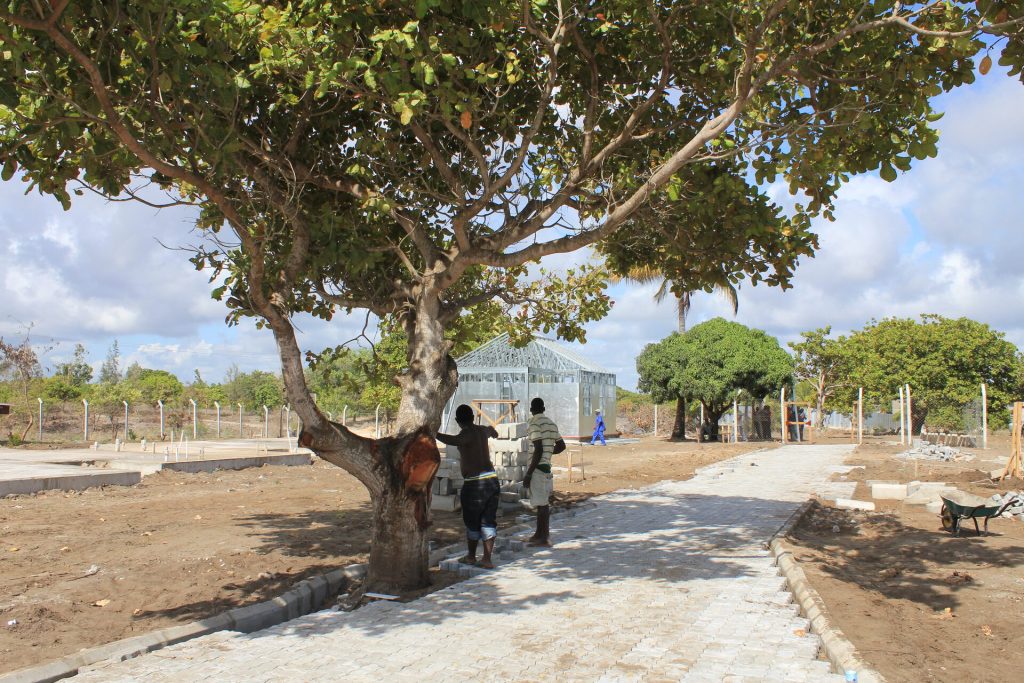
Tanzania is, by volume, one of the world’s leading raw cashew nut producers. It is not, by any measure, a leading cashew processor. As the 2026/27 season — the government’s own deadline for changing that — gets underway, it is worth looking at why the gap has proven so durable.
The raw-export economy, in one season’s numbers
In the 2022/23 fiscal year, Tanzania earned roughly US$226.9 million from raw cashew nut exports, with the crop contributing an estimated 10–15 percent of the country’s total foreign exchange earnings, according to trade reporting compiled by Milling Middle East & Africa. Despite that scale, only around 5 percent of the national crop is processed domestically; the remaining 95 percent leaves the country raw, overwhelmingly bound for India, with Vietnam as a secondary destination. That imbalance is not new — a 2004 USAID-funded review of the sector found 94 percent of the crop being exported raw at the time — which suggests the processing share has moved only modestly in twenty years despite a series of policy interventions aimed at reversing it.
Why Tanzania taxes its own crop
The main lever has long been an export tax on raw nuts, explicitly designed to make raw export less attractive relative to domestic processing: set at 10 percent of FOB value, it was raised to 15 percent in 2011. On top of that sits an export levy — 15 percent of FOB value or US$160 per tonne, whichever is higher — collected by the Cashewnut Board of Tanzania. The logic, going back at least to a 2004 policy review commissioned under USAID’s DAI PESA project, is that a raw-export tax narrows the price gap between what an exporter and a domestic processor can afford to pay farmers, in theory nudging more of the crop toward local factories. Whether the levy is set at a level that actually achieves that, given how thin domestic processing capacity remains, has been debated within the sector for two decades.
The 2020/21 pivot: a lane for local processors
The most recent structural change came with the Primary Market System, introduced from the 2020/21 crop season, which lets CBT-licensed local processors buy raw cashews directly from Agricultural Marketing Cooperative Societies without competing against export-focused buyers in the main auction — and, farmers report, without some of the levy deductions applied on the open market. Reporting from The Citizen found the new channel welcomed by some cooperative managers, who said farmers received full payment without auction-style deductions, but also documented real friction: confusion among small-scale processors over licensing requirements, opacity around buyer identity, and at least one case of hundreds of tonnes going unpaid.
The current target: fully processed exports by 2026/27
The government’s most concrete recent commitment is a plan, reported in 2026, to end raw cashew exports altogether by the 2026/27 season — the season now beginning. Central to the plan is an industrial cluster on roughly 1,575.5 acres in Nanyamba District, Mtwara Region, earmarked for cashew-processing factories intended to handle upwards of 300,000 tonnes of raw nut domestically, including shell by-product treatment. Former Deputy Agriculture Minister Anthony Mavunde framed the push as protecting farmer benefit, while Agriculture Minister Hussein Bashe was blunter about the cost of inaction, arguing the country was “missing out on a possible opportunity to generate lucrative profits, in terms of foreign currencies” by continuing to export raw. A 2026 opinion piece in The Citizen went further, estimating — as an illustrative argument rather than an audited government figure — that continued raw export could cost Tanzania a cumulative $1.73 billion by 2030, based on price differentials it cited between raw nuts (around $1,200/tonne) and finished retail-packed kernels (upwards of $25,000/tonne); those figures are one commentator’s framing of the opportunity cost, not an official estimate, but they illustrate the scale of value the debate is about.
Why the gap persists
The recurring obstacle across every iteration of this policy is capacity. A 2004 sector review found the country’s domestic processors handling only a few thousand tonnes a year against a national harvest already above 100,000 tonnes; two decades later, official figures still put processed volume at only about 5 percent of a crop that has since grown past 230,000 tonnes. Raising an export tax does little if there is nowhere for the diverted nuts to go — a dynamic the sector’s own consultants flagged as far back as 2004, when they warned that domestic processing’s “apparent advantages” were undercut by a skills and infrastructure gap that a tax alone could not close. The Nanyamba cluster is the government’s latest attempt to close that gap directly with processing capacity rather than tax policy alone; whether it operates at meaningful scale by the season now underway is the question the 2026/27 target will settle.
- Milling Middle East & Africa, "Tanzania targets to export processed cashew nuts by 2026/27" — https://millingmea.com/tanzania-targets-to-export-processed-cashews-by-2026-27/ — 2026-09-26
- The Citizen (Tanzania), "Raw deal: How unprocessed cashews deny Tanzania billions" — https://www.thecitizen.co.tz/tanzania/oped/raw-deal-how-unprocessed-cashews-deny-tanzania-billions--5138020 — 2026-09-26
- The Citizen (Tanzania), "New cashewnut marketing system: Success and challenges" — https://www.thecitizen.co.tz/tanzania/business/-new-cashewnut-marketing-system-success-and-challenges-4137078 — 2026-09-26
- Cashewnut Board of Tanzania, "Tax and Non-Tax Incentives to Cashew Processing Investors" — https://www.cashew.go.tz/wp-content/uploads/2022/09/TAX-NON-TAX-2-INCENTIVES-V3.pdf — 2026-09-26
- DAI PESA Project (USAID-funded), "Policy and Taxes in the Tanzanian Cashew Industry," John Fynn, October 2004 — https://www.enterprise-development.org/wp-content/uploads/DAI-pesa-Polices-Taxes-in-the-Tanzanian-Cashew-I.pdf — 2026-09-26
- Wikipedia, "Cashew production in Tanzania" — https://en.wikipedia.org/wiki/Cashew_production_in_Tanzania — 2026-09-26