What “W320” Actually Means: A Plain-English Guide to Cashew Kernel Grades
Published 26 September 2026 · Commodities.tz Editorial
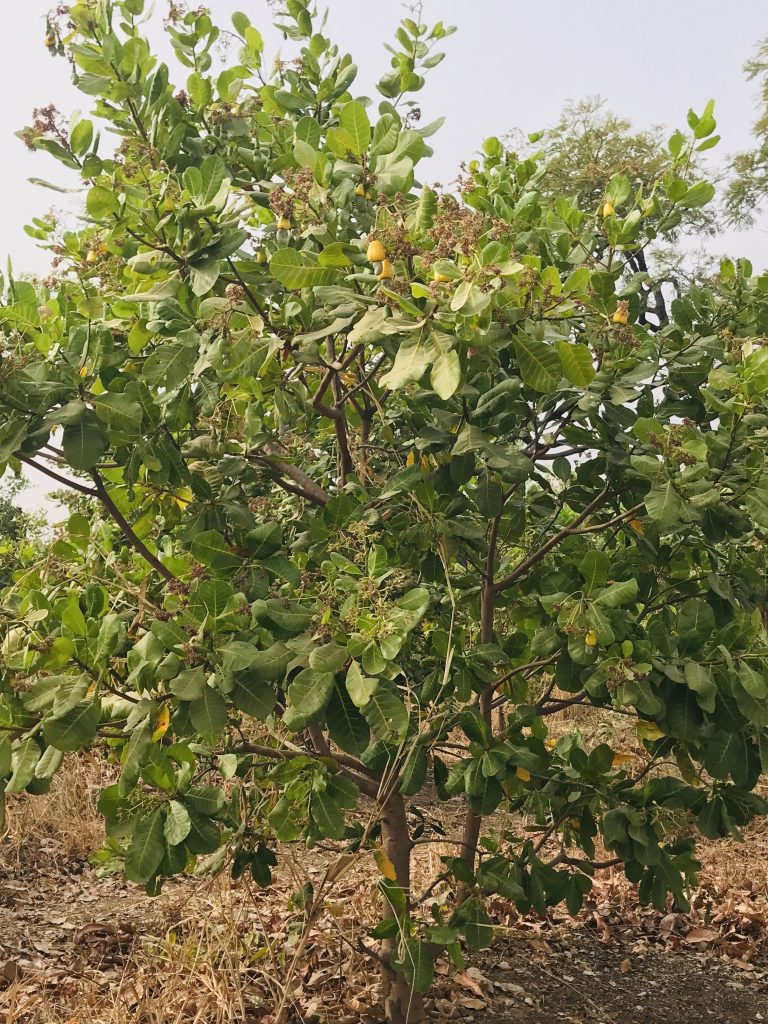
Two different quality systems govern a Tanzanian cashew’s journey from tree to jar, and it is easy to conflate them. The first is the outturn ratio — a raw-nut quality measure used at the Tanzanian auction stage, expressed as pounds of kernel recoverable per 80kg bag, with the Cashewnut Board of Tanzania treating roughly 48 lbs as the “standard grade” threshold. The second, and the subject here, is kernel grading: the classification applied after the nut has been shelled, peeled and dried — a stage that, because well over ninety percent of Tanzania’s crop still leaves the country as raw nuts, mostly happens in Vietnam or India rather than in Tanzania itself. The international reference for that second system is UNECE Standard DDP-17, adopted in November 2012 with the International Nut and Dried Fruit Council, and it is worth reading in its own terms rather than through a trader’s paraphrase.
Whole versus broken: the first split
The standard’s baseline distinction is deceptively simple. A kernel counts as “whole” if more than seven-eighths of it is intact — meaning up to one-eighth can be broken off before it drops out of the whole category. Once more than an eighth is missing, it becomes a “broken,” and brokens are further split into three named categories: butts (at least three-eighths of a kernel, broken crosswise but with the two cotyledon halves still naturally attached), splits (kernels that have separated lengthwise along their natural seam, provided no more than an eighth is chipped off), and pieces (kernels broken into more than two fragments). This vocabulary — butts, splits, pieces — appears throughout cashew trade contracts and is not interchangeable.
The size codes: what the number in “W320” means
For whole kernels, the standard sets size codes as a maximum count of kernels per pound (and, in parallel, per kilogram): W150, W180, W210, W240, W320, W450 and W500, the number falling as kernel size increases. A W320, for instance, must contain no more than 320 kernels per pound (roughly 706 per kilogram) — a mid-sized kernel that is, by volume, the single most commonly traded whole grade globally, according to industry commentary from processors and trade brokers. Sizing is compulsory for the top quality tier (“Extra”) but optional for the two lower tiers.
Quality classes: white, scorched, and “dessert”
Separately from size, the standard sorts kernels into three quality classes based on color and blemish tolerance. “Extra” class carries the commercial designation “white” — white, pale ivory, pale ash-grey or light yellow kernels, permitted no more than 6 percent defective produce by weight. Class I, commercially called “scorched” or “lightly blemished,” runs to light brown, light ivory or deep ivory-yellow kernels with a 9 percent defect tolerance. Class II — “scorched seconds” or “dessert” — allows discoloured, black-spotted, immature or stained kernels, with defects tolerated up to 12 percent. All classes are capped at 5.0 percent moisture content.
Pieces have their own size ladder
Fragments too small to count as butts or splits are sized by which sieve they fail to pass through: large pieces (will not pass a 4.75mm sieve), small pieces (2.80mm), very small pieces (2.36mm), and “baby bits” or granules (1.70mm) — the smallest fragments typically destined for confectionery and bakery use rather than retail nut packs.
A rule worth knowing: where “origin” comes from
One provision in the standard has outsized commercial consequences for a raw-nut-exporting country like Tanzania. Because de-shelling and peeling a raw cashew nut counts as “significant transformation,” the country where that processing happens — not where the nut was grown — may legally be declared as the kernel’s country of origin on export packaging. In practice, this means cashews grown in Mtwara or Lindi that are shelled in Vietnam or India can be marketed abroad as Vietnamese- or Indian-origin kernels. It is a small labeling technicality with a large effect: it is one reason Tanzanian-origin cashew, despite the country’s status as a major raw-nut supplier, rarely appears as a named origin on retail shelves.
- UNECE Standard DDP-17 concerning the marketing and commercial quality control of Cashew Kernels, adopted 8 November 2012 — https://www.unece.org/sites/default/files/datastore/fileadmin/DAM/trade/agr/standard/dry/dry_e/DDP17_CashewKernels_2013_e.pdf — 2026-09-26
- Target Agriculture, "Cashew Kernel Grades: Choose the Right Grade for Every Product" — https://www.target-agriculture.com/cashew-kernel-grades-choose-the-right-grade-for-every-product/ — 2026-09-26
- Cashew Technology, "Cashew Outturn KOR" — https://cashew-technology.com/cashew-outturn-kor/ — 2026-09-26
- Milling Middle East & Africa, "Tanzania targets to export processed cashew nuts by 2026/27" — https://millingmea.com/tanzania-targets-to-export-processed-cashews-by-2026-27/ — 2026-09-26